About
Operator, not observer.
I came up as an engineer and I advise like one. I read the schema before I touch it, I want to see the failure mode before I sign the plan, and I measure an AI program by whether it works in production and survives the budget review, not by the demo. That is why the strategy and the delivery come from the same person.
In 2026 I built and led an Anthropic partnership practice at a U.S. AI and enterprise software consultancy, from zero, with Claude in production in regulated environments. Before that I founded LatentAxis, a boutique AI engineering firm for healthcare, legal, and finance, co-founded renov8 and Ghostresellers as CTO, and built mission-critical data systems in the U.S. Air Force.
I work with a small number of companies at a time as a fractional AI executive and advisor. I have written a working paper on the economics, with a reference model you can run, and a set of essays on the rest. LatentAxis is my independent practice and the name I publish under. This site is where the work and the thinking live.
Previously
At a U.S. AI and enterprise software consultancy, I built the Anthropic practice from zero: strategy, roadmap, pricing, delivery model and the partner relationship, advising executive teams across seven concurrent engagements in financial services, software and energy. I designed and operated a multi-tenant Claude platform with per-company value tracking so sponsors see realized value rather than projections, created an AI cost observability platform that was later commercialized, and built the value realization tooling executives use to fund AI programs on honest numbers. I authored a Claude architect certification, delivered executive workshops, co-led a webinar series, and contributed to a public financial services agent repository.
Case study →- 25,000+
- Employees on one governed Claude platform across 10 portfolio companies
- $20M+
- Services pipeline in the first 90 days
- 500+
- Practitioners trained on a Claude architect certification I authored
- 7
- Concurrent enterprise engagements advised
On my desk
Updated
What I am working on, so you know what is coming and when to come back.
Want to know when the next one lands? Subscribe, or follow by RSS.
Experience
Scope of responsibility: the P&L and roadmap of an AI practice, a governed platform serving 25,000+ employees across ten portfolio companies, seven concurrent enterprise engagements, and a certification program with 500+ practitioners. Before that, two companies co-founded as CTO and mission-critical systems in the Air Force.
- 2026 AI Offering Lead, Anthropic partnership, U.S. consultancy Built and led the practice from zero: strategy, roadmap, pricing, delivery model and the partner relationship. Seven concurrent enterprise engagements, a multi-tenant Claude platform for a private equity portfolio, and a certification program.
- 2025– Founder and Principal AI/ML Engineer · LatentAxis Boutique AI engineering for healthcare, legal, and finance. Multi-agent orchestration that removed 60%+ of manual operational work; retrieval systems that cut lookup time 80%+; anomaly pipelines processing millions of records daily. Now my independent practice and the name I publish under.
- Co-founder and CTO · renov8, Ghostresellers Co-founded both as CTO; renov8 taken from architecture to investor-demo readiness.
- 2021–25 Operations and Telecommunications · U.S. Air Force Mission-critical data systems: emergency response, medical records, leadership dashboards.
Research
Forecast, Measure, Optimize A workflow-level model for the value and consumption of agentic AI. Working paper v0.1, 2026, Zenodo DOI 10.5281/zenodo.23197852, with a reference implementation.
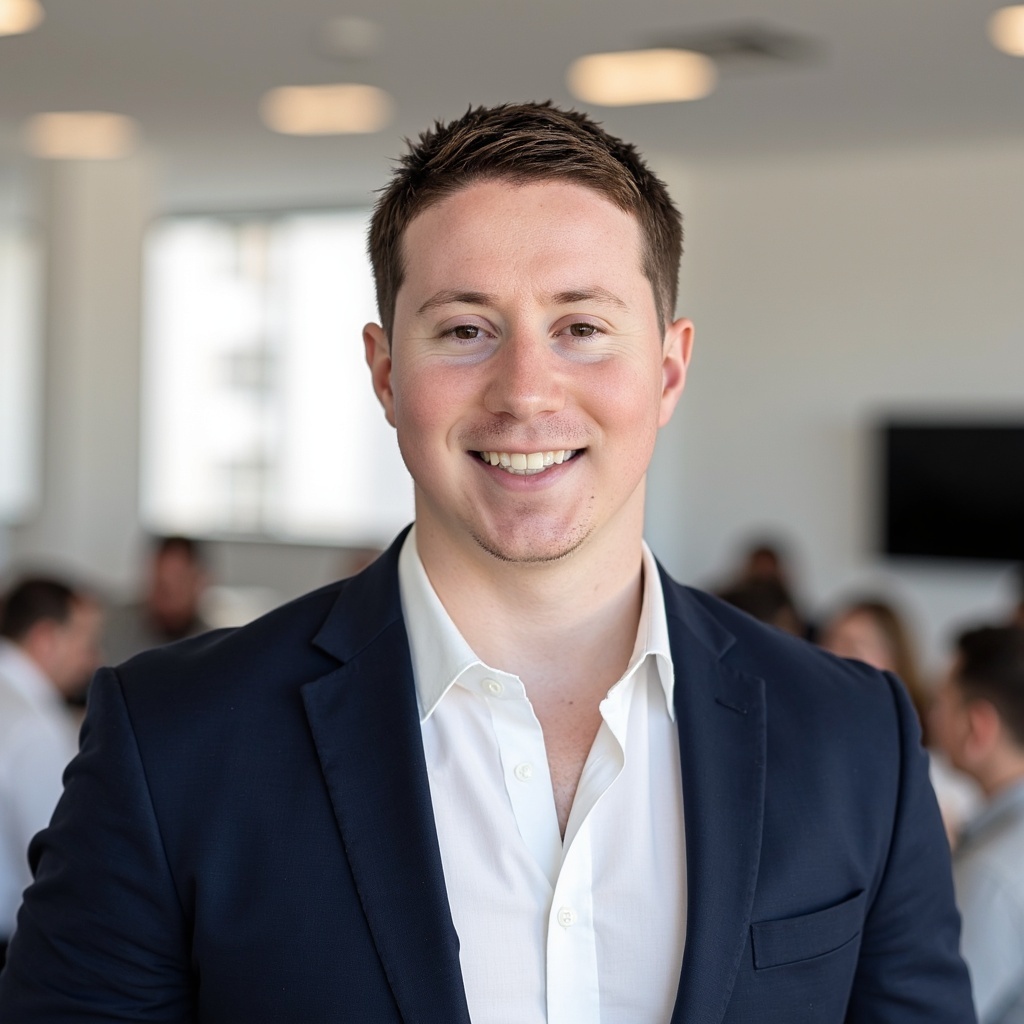
Most enterprise AI never makes it out of the pilot, and the model is rarely the reason. What building these systems taught me is that the hard part is correctness you can verify, failure modes you can see, cost that maps to a unit of work, and handoffs clean enough that someone else can own the result.
So the questions I answer for a board are the four that decide whether a program is still funded a year after launch: what should we build, what will it cost to run, how do we govern it, and how do we know it is working.
I stay close enough to the work to know what a team can actually ship. It keeps my estimates honest and my opinions earned.
Positions I stand behind
Three positions I hold and have written up in depth. Each one cost something to learn.
Two numbers, not one
Forecast what an AI workflow returns and what it costs to run from the same inputs, with a ramp and a lopsided band.
Read →Governance is the strategy
Design accountability into the architecture before the first workflow ships. Regulation will always arrive late.
Read →Enterprise grade is everything around the model
Identity, observability, cost control, failure handling, and ownership are where demos go to die.
Read →How I lead
- Governance first, then velocity.
- Accountability is designed into the architecture before the first workflow ships. It is the most reliable predictor of whether a program survives its first incident.
- Two numbers, always.
- No business case leaves my team with a value line and no run-cost line. Sponsors fund programs on realized value, not projections.
- Teach the client to run it.
- Certification, clean handoffs, and no lock-in are the deliverable. A program that still needs its consultants a year later is a program that failed quietly.
- Operator, not observer.
- I still build. It keeps my advice honest about what a team can actually ship, and it is why the strategy and the delivery come from the same person.
- Name the failure modes out loud.
- Silent failures, the confident wrong answers, are the dangerous ones. My teams instrument for them before launch and say what we got wrong afterward.
Ways to work together
AI Review
A fixed-scope business case, run-cost forecast and roadmap in 30 days, with a written recommendation on what not to build. Most engagements start here.
How it works →Fractional AI executive
Starts with the four questions and a written answer to each. A small number of companies at a time, so every one gets the operator, not a bench.
How it works →Enterprise delivery
Scoped to a measured outcome, instrumented from the first call, and handed off to a team certified to run it.
See it at scale →Conversations I welcome:
- CEOs and boards deciding what their AI function should own.
- Private equity sponsors who want realized value across a portfolio, not projections.
- Anyone with post-deployment data that would sharpen the FMO model.
I also speak to boards and portfolio leadership. Email to book.
Let's talk
If you are deciding what to build, what it will cost to run, or how to govern it, I would like to hear from you.
Education · University of Arizona: B.A.Sc. Applied Computing, Software Development, summa cum laude; M.S. Software Engineering candidate.